About 93 minutes
Selections from Ancient Irish Poetry — Themes and Context
Science Fiction Utopias
21,162 recorded words. 5 minutes difference from this book's estimate.
View Gutenberg source #32030
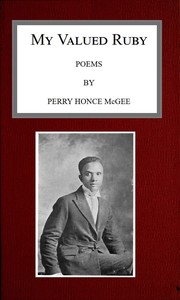
For My Valued Ruby: Poems — A Closer Reading, the stored edition analysis reports 20,016 words, 1 hr 28 min estimated reading time, and 5 detected text sections.
The text analysis averages about 22.2 words per sentence, while the detected sections provide another way to judge how the source is divided.
Project Gutenberg metadata also associates the work with “American poetry -- African American authors,” connecting these edition facts with the source record’s subject description.
Explore this collection
These alternatives are selected using recorded categories and estimated reading time.
About 93 minutes
Science Fiction Utopias
21,162 recorded words. 5 minutes difference from this book's estimate.
View Gutenberg source #32030About 101 minutes
Science Fiction Utopias
23,135 recorded words. 13 minutes difference from this book's estimate.
View Gutenberg source #67069About 69 minutes
Science Fiction Utopias
15,687 recorded words. 19 minutes difference from this book's estimate.
View Gutenberg source #75529Search stored excerpts and compare books → Choose by your preferences →
Choices use stored catalog measurements. Estimates vary with reading speed. A shared category is a catalog label, not a claim that two books have the same argument or literary quality.
Search reads excerpt text stored with this catalog and links to its associated Gutenberg record. The connection is stored in the site database; this tool does not recheck that every excerpt is word-for-word identical to that external record. Excerpt search does not cover every chapter and does not verify historical publication dates.
Catalog snapshot checked: 2026-09-26. Coverage: 94 public books, 94 available source excerpts.
Calculated from edition completeness, EPUB availability, text structure and catalogue metadata. Not a user rating.
Total of 100 points, scaled to a 2.5-5.0 range. Editions with an empty description or a missing EPUB file are not scored.
Public-domain source text
The source text is kept in the dedicated reader, separate from this catalogue record and its commentary.
Perry Honce McGee's My Valued Ruby: Poems (1920) opens with a dedication "to my race" and a table of contents listing over 100 poems, many addressing love, nature, and moral reflection. The collection moves between standard English and dialect pieces such as "After de Toun Hall Supper" and "E'er Januwah De 2," suggesting a deliberate range of voices. Recurring images—roses, breath, fading light—anchor the poems in a sensory world where love is both tender and precarious.
Love in these poems is often figured as a rose: beautiful, delicate, and subject to decay. In "Faded Love," the speaker mourns a love that "faded like a rose for the want of dew," while "The Breath of a Rose" compares a beloved's soul to that same fragrance. The tension between permanence and loss runs through many pieces. "Always" insists on constancy—"There's always a look in your eyes, / There's always a rose in your smile"—yet the same poem admits "There's always a cloudy day." Even in celebration, McGee undercuts certainty: "All, in a moment it can leave us" ("All"). The poems rarely settle into pure joy; they hold hope and sorrow together.
Several poems employ African American dialect, a choice that signals both cultural specificity and literary tradition. "After de Toun Hall Supper" and "E'er Januwah De 2" appear alongside standard-English lyrics, creating a contrast in register. The dialect pieces often treat everyday scenes—a supper, a frosty morning—with a rhythmic, colloquial cadence. In "Humin to De Air," the speaker muses on nature in a voice distinct from the more formal love poems. This juxtaposition suggests McGee was working within multiple poetic modes, perhaps addressing different audiences or exploring different facets of experience. The dialect poems ground the collection in a particular community and its speech patterns.
Not all poems are love lyrics. "The Convict" tells of a man imprisoned for "keeping bad company," ending with a warning: "Steal not from yourself nowadays / For your work is your boss." "The Evils of Alcohol" and "Natural Born Colored Man" address social issues directly, while "Democracy" and "The Star of Liberia" hint at political themes. These poems sit alongside personal meditations like "A Poet's Dark Day" and "A Poet's Power," suggesting that McGee saw poetry as both private expression and public commentary. The range—from a convict's lament to a lover's plea—gives the collection a breadth that resists easy categorization.
Readers approaching My Valued Ruby will find a poet working across registers and moods. The dialect poems reward attention to rhythm and vernacular phrasing, while the love poems gain power from their repeated images of roses and breath. McGee's moral pieces, though sometimes didactic, anchor the collection in the concerns of its time. The book invites reading as a whole, where contrasts between voices and themes create a fuller picture of the poet's craft.
The rain kept time with the slow turn of pages in McGee’s rose-heavy lines, until I paused too long on a poem about lost voices. That stillness carried me, almost by accident, to another shelf, where Apollo and Marsyas, and Other Poems — A Closer Reading waited, its own quiet tension between beauty and wound echoing what I’d just felt. The afternoon folded into both.
Use these questions to collect your thoughts before moving on.









