About 29 minutes
New Thought Pastels — Inside the Classic
Historical Psychological Social Fiction
6,543 recorded words. 6 minutes difference from this book's estimate.
View Gutenberg source #3257
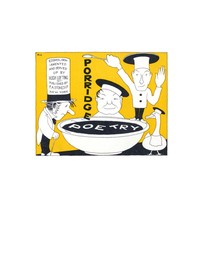
Before opening Porridge poetry — A Reader’s Guide, the edition data offers a quick orientation: 5,201 words, 23 min estimated reading time, and 36 detected text sections.
The text analysis averages about 19.2 words per sentence, while the detected sections provide another way to judge how the source is divided.
Project Gutenberg metadata also associates the work with “Children's poetry, English,” connecting these edition facts with the source record’s subject description.
Explore this collection
These alternatives are selected using recorded categories and estimated reading time.
About 29 minutes
Historical Psychological Social Fiction
6,543 recorded words. 6 minutes difference from this book's estimate.
View Gutenberg source #3257About 39 minutes
Historical Psychological Social Fiction
8,924 recorded words. 16 minutes difference from this book's estimate.
View Gutenberg source #4697About 41 minutes
Historical Psychological Social Fiction
9,302 recorded words. 18 minutes difference from this book's estimate.
View Gutenberg source #5408Search stored excerpts and compare books → Choose by your preferences →
Choices use stored catalog measurements. Estimates vary with reading speed. A shared category is a catalog label, not a claim that two books have the same argument or literary quality.
Search reads excerpt text stored with this catalog and links to its associated Gutenberg record. The connection is stored in the site database; this tool does not recheck that every excerpt is word-for-word identical to that external record. Excerpt search does not cover every chapter and does not verify historical publication dates.
Catalog snapshot checked: 2026-09-26. Coverage: 94 public books, 94 available source excerpts.
Calculated from edition completeness, EPUB availability, text structure and catalogue metadata. Not a user rating.
Total of 100 points, scaled to a 2.5-5.0 range. Editions with an empty description or a missing EPUB file are not scored.
Public-domain source text
The source text is kept in the dedicated reader, separate from this catalogue record and its commentary.
Hugh Lofting introduces himself as the Porridge Poet, a self-deprecating cook of verse whose inspiration comes from the ice-box and whose rhymes are picked from the spice-box. The opening poem establishes a playful culinary metaphor: poetry is mixed like porridge, with a pint of vermicelli pounded to jelly, a pinch of grammar, sifted syntax, and a half-teaspoonful of tin tacks. This conceit frames the collection as deliberately whimsical and unpretentious, inviting readers to enjoy the free-and-easy flavour of kitchen rhymin’.
Lofting populates his verses with characters and terms that seem to spring from pure sound-play. The Lollipopinjay, a creature that lives on lollipops, leaps and swirls with a refrain of “Hip, hip, hooray!” The names Scallywag and Gollywog suggest mischief and nonsense, and their voyage aboard a log dissolves into an endless argument over captaincy. In “Latitudes and Longitudes,” the poet extends the pattern by coining words like platitudes, chit-chatitudes, and wrongitude—rhyming suffixes that turn abstract concepts into playful, tangible objects. These inventions are not random; they follow consistent phonetic logic, making the poems feel like language games.
Several poems are built around dance rhythms and repetitive structures. Vera Virginia Ham boasts of her prowess in the barn-dance, two-step, sausage-roll trot, pig-jig, and hog-jog, each name adding a comic, animalistic twist to familiar steps. The Lollipopinjay’s lines alternate between short, energetic actions—“I jump, I crouch and pop away”—and the repeated exclamation “Hip, hip, hooray!” This pattern gives the poem a chant-like quality suitable for reading aloud. Even the picnic poem, “Picnic,” uses a series of imperative commands (“Ella, fell a Maple tree. / Hilda, build a Fire for me.”) that accumulate into a rhythmic list, ending with the exclamation “Fancy, Nancy, / What a spree!”
Not all poems are monologues; some feature brief, pointed exchanges. In “The Fledgeling and the Bug,” a young bird asks a Sweet Potato Bug if it is “digestible,” only to be rebuffed with a shrug and the retort that the bug’s taste is “detestable.” The dialogue is minimal but reveals a comic mismatch of expectations—the fledgling’s naive inquiry versus the bug’s indignant refusal. This dramatic structure, rare in children’s verse of the period, gives the poem a fable-like quality without moralizing. Similarly, “Scallywag and Gollywog” implies a quarrel through the narrator’s report, leaving the reader to imagine the ongoing dispute.
Readers will find that Lofting’s verses reward oral performance: the strong rhythms, invented words, and abrupt dialogues come alive when spoken aloud. The poems are short, often no more than a single stanza, making the collection suitable for dipping into at random. Pay attention to the way Lofting plays with suffixes and compound words—these are not mere nonsense but deliberate linguistic constructions that give each poem its distinctive flavour.
Years at the reference desk have taught me that nonsense verse, like the Porridge Poet’s kitchen dances, often hides the truest heart. There is a similar quiet wink in The Rubaiyat of Omar Khayyam Jr. — Key Ideas to Explore, a shared fondness for life’s odd, fleeting music. Both books sit together on my shelf, whispering old, unhurried truths.
Create a short personal record of your experience with this book.









