About 46 minutes
Nothing to Eat — Text and Context
Adventure Picaresque Fiction
10,411 recorded words. 0 minutes difference from this book's estimate.
View Gutenberg source #5868
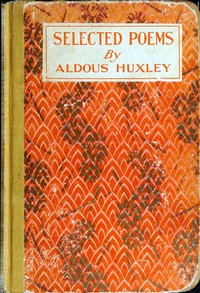
Before opening Selected Poems — Story, Setting & Ideas, the edition data offers a quick orientation: 10,465 words, 46 min estimated reading time, and 3 detected text sections.
The text analysis averages about 26.4 words per sentence, while the detected sections provide another way to judge how the source is divided.
Project Gutenberg metadata also associates the work with “English poetry -- 20th century,” connecting these edition facts with the source record’s subject description.
Explore this collection
These alternatives are selected using recorded categories and estimated reading time.
About 46 minutes
Adventure Picaresque Fiction
10,411 recorded words. 0 minutes difference from this book's estimate.
View Gutenberg source #5868About 50 minutes
Adventure Picaresque Fiction
11,350 recorded words. 4 minutes difference from this book's estimate.
View Gutenberg source #136About 41 minutes
Adventure Picaresque Fiction
9,395 recorded words. 5 minutes difference from this book's estimate.
View Gutenberg source #69484Search stored excerpts and compare books → Choose by your preferences →
Choices use stored catalog measurements. Estimates vary with reading speed. A shared category is a catalog label, not a claim that two books have the same argument or literary quality.
Search reads excerpt text stored with this catalog and links to its associated Gutenberg record. The connection is stored in the site database; this tool does not recheck that every excerpt is word-for-word identical to that external record. Excerpt search does not cover every chapter and does not verify historical publication dates.
Catalog snapshot checked: 2026-09-26. Coverage: 94 public books, 94 available source excerpts.
Calculated from edition completeness, EPUB availability, text structure and catalogue metadata. Not a user rating.
Total of 100 points, scaled to a 2.5-5.0 range. Editions with an empty description or a missing EPUB file are not scored.
Public-domain source text
The source text is kept in the dedicated reader, separate from this catalogue record and its commentary.
In Selected Poems, Aldous Huxley’s verse oscillates between sharp sensory observation and a self-conscious retreat into abstraction. The opening poem, “Song of Poplars,” immediately establishes this dual motion: the speaker tunes his flute to trees that “pierce, keenly, subtly shrill” the landscape, yet the poplars themselves are described as “airy leafage of the mind.” This interplay between external nature and internal reflection recurs throughout the collection, often mediated by images of glass, water, and reflection.
The poems frequently inhabit a suspended state—neither fully engaged with the physical world nor entirely detached from it. In “The Reef,” the speaker envies his “green aquarium of phantom fish” and longs to burst free from a “matrix dark,” yet the escape he imagines is toward “roads of music and air,” not solid ground. Huxley’s early work, published in 1925, shows a poet already skeptical of pure sensation, yet unable to abandon it entirely.
Huxley repeatedly frames perception through barriers that both reveal and distort. In “The Reef,” the speaker watches “phantom fish” through “misty panes,” and the aquarium becomes a metaphor for a mind that observes but cannot participate. The fish are “goggling in on me,” reversing the expected direction of sight: the observer is observed, trapped in his own detachment. Similarly, “The Mirror” (a poem whose title alone signals self-reflection) and the “glazedly / Reflected” gaze in “The Reef” suggest that consciousness itself is a kind of aquarium—clear yet isolating.
This motif extends to the natural world. In “Song of Poplars,” the trees are “rustling in silvery whispers” and their leaves are “twin-hued scales,” as if the landscape were a fish’s skin. The speaker asks whether the poplars are “an upward agony / Of undefined desires,” projecting human longing onto vegetable forms. Huxley’s imagery thus blurs the boundary between inner and outer, making the external world a mirror of the mind’s own restlessness.
Many poems in this collection are marked by a heavy, almost oppressive stillness. “Summer Stillness,” “Quotidian Vision,” and “Return to an Old Home” all evoke a world where motion has ceased. In “The Reef,” the speaker describes “my few clear quiet autumn days” as “all too still,” and confesses “I am grown less / Than human, listless, aimless as the green / Idiot fishes.” The stillness is not peace but stagnation, a rotting with the leaves.
Against this inertia, Huxley sets a yearning for violent release. The speaker of “The Reef” imagines “bursting this matrix dark” and speeding “on roads of music and air.” In “L’Après-Midi d’un Faune,” a translation-adaptation of Mallarmé, the faun’s pursuit of nymphs is a frenzy of “virginal fury” and “passionate laughter.” Yet even here, the climax is deferred: the prey slips away, and the faun ends “forgetful” under the “heavy hush of noon.” The urge to break free is constant, but the escape is always temporary or imagined.
Huxley frequently gives voice to non-human entities, but these are not simple personifications. In “Song of Poplars,” the trees are asked whether they are “happy in the golden march / Of sunlight” or whether they “watch the uncertain way / That leads the withering moon.” The questions are rhetorical, but they reveal the speaker’s own uncertainty about purpose and emotion. The poplars do not answer; instead, the speaker hears “voices dim below / Their shrillness” and then “vast silences.”
This pattern recurs in “The Elms” and “The Flowers,” where natural objects are addressed as if they might possess intention. Yet the poems resist anthropomorphism: the elms remain “dark and rusty flame,” the flowers are merely “twin-hued scales.” Huxley’s technique is to hold the natural world at a distance, even as he tries to interrogate it. The result is a poetry of unresolved tension, where the inanimate world is both a mirror and a mystery.
Huxley’s Selected Poems rewards readers who attend to its recurring images and tonal shifts. The poems are best approached not as a unified statement but as a series of experiments in perception—each one testing how far the mind can go into the world before it turns back on itself. The collection’s brevity (just over 10,000 words) invites rereading, and the contrasts between poems often prove more revealing than any single piece. Let the silences between the lines guide you as much as the words themselves.
There’s a particular hush in Huxley’s early poems, that glassy distance between the self and the seen. It reminds me of sitting with A Dome of Many-Coloured Glass — Themes and Context, where the same shimmering boundary holds—touching the world’s colors, yet never quite dissolving into them. A familiar ache, that lovely, lonely clarity.
Create a short personal record of your experience with this book.









