About 28 minutes
The Passionate Pilgrim — Themes and Context
Adventure Picaresque Fiction
6,384 recorded words. 11 minutes difference from this book's estimate.
View Gutenberg source #1544
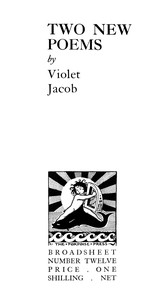
The source record for Two new poems — Context and Discussion measures this digital text at 3,773 words, 17 min estimated reading time, and 4 detected text sections.
The text analysis averages about 26.2 words per sentence, while the detected sections provide another way to judge how the source is divided.
Project Gutenberg metadata also associates the work with “Scottish poetry,” connecting these edition facts with the source record’s subject description.
Explore this collection
These alternatives are selected using recorded categories and estimated reading time.
About 28 minutes
Adventure Picaresque Fiction
6,384 recorded words. 11 minutes difference from this book's estimate.
View Gutenberg source #1544About 34 minutes
Adventure Picaresque Fiction
7,609 recorded words. 17 minutes difference from this book's estimate.
View Gutenberg source #74892About 39 minutes
Adventure Picaresque Fiction
8,791 recorded words. 22 minutes difference from this book's estimate.
View Gutenberg source #73189Search stored excerpts and compare books → Choose by your preferences →
Choices use stored catalog measurements. Estimates vary with reading speed. A shared category is a catalog label, not a claim that two books have the same argument or literary quality.
Search reads excerpt text stored with this catalog and links to its associated Gutenberg record. The connection is stored in the site database; this tool does not recheck that every excerpt is word-for-word identical to that external record. Excerpt search does not cover every chapter and does not verify historical publication dates.
Catalog snapshot checked: 2026-09-26. Coverage: 94 public books, 94 available source excerpts.
Calculated from edition completeness, EPUB availability, text structure and catalogue metadata. Not a user rating.
Total of 100 points, scaled to a 2.5-5.0 range. Editions with an empty description or a missing EPUB file are not scored.
Public-domain source text
The source text is kept in the dedicated reader, separate from this catalogue record and its commentary.
This slim volume presents two narrative poems by Violet Jacob, each employing a distinct voice and form. 'Rohallion' is written in Scots dialect, its speaker a wanderer who recalls the comforts of home—a mother baking bannocks, a father gathering sheep—while traveling southward. The poem's refrain-like return to the name 'Rohallion' and the image of 'the reek aboon Pairth' anchors the speaker's longing in a specific landscape. In contrast, 'The Little Dragon' uses formal English verse to tell of a nun whose encounter with a passing knight disrupts her cloistered devotion. The knight's 'golden helm' and the dragon on his crest become symbols that transform her piety into a 'golden fire of youth.'
'Rohallion' opens with the speaker's material poverty—'My buits are at rest on the midden, I haena a plack'—and immediately establishes a voice rooted in the Scots vernacular. The poem's landscape is precise: the 'braes at the back o' Rohallion,' the 'neuk o' Strathtay,' and the 'loch o' Rohallion' create a topography of memory. The speaker's journey is both physical and emotional, as the wind from the knowes and the stars on the loch draw him homeward. The poem's structure, with its recurring place-name and the haunting voice that 'sings as I'm liftin' my pack,' suggests a cyclical pattern of departure and return. The final line—'My lad, ye'll be back!'—implies that the pull of home is inescapable, though the speaker remains on the road.
'The Little Dragon' contrasts the nun's confined life with the knight's worldly freedom. The poem opens with her watching 'Day's dying' from the cloister wall, feeling heaven 'too far, too mystical.' The harvest fields and the 'gold ears of the corn' represent a natural world she cannot possess. When the knight appears, his 'golden helm' and the dragon's 'leer uncouth' disrupt her piety. The 'golden fire of youth' that flashes from his eyes 'burned the sacred stillness of her days,' replacing God's altar with 'that ardent haze.' The other nuns misinterpret her distraction as divine vision, calling her 'His Saint.' The poem thus explores the tension between spiritual devotion and human desire, leaving the nun's inner state ambiguous.
Though the poems differ in dialect and setting, they share a preoccupation with longing and the pull of an absent presence. 'Rohallion' uses a regular ballad-like meter and rhyme scheme, with stanzas of six lines and a refrain-like repetition of place-names. 'The Little Dragon' employs a more varied stanza form, with lines of differing lengths and a rhyme scheme that often pairs a longer line with a shorter one. Both poems feature a central figure—the wanderer and the nun—who is caught between two worlds: home and road, cloister and world. The knight's 'golden helm' and the dragon's 'leer' mirror the 'trail and the shine' of the stars in Rohallion's loch, each image carrying a charge of desire or memory.
Readers may wish to compare how Jacob adapts her diction and meter to each poem's subject. The Scots of 'Rohallion' demands careful reading aloud to catch its rhythm and idiom, while 'The Little Dragon' rewards attention to its symbolic imagery. The three illustrations by A. Mason Trotter, mentioned in the title page, are not included in this digital edition but were part of the original 1924 Porpoise Press publication.
I keep thinking about that wanderer in "Rohallion," how the ache for home follows him everywhere, even the prettiest scenery can't settle it. It reminded me of something quieter in Selected Poems — Story, Setting & Ideas, where place does that same whispering work. That longing doesn't fade; it just changes shape, like a familiar room in dim light.
Create a short personal record of your experience with this book.









